
Relationships Before Marriage in the Qur'an
PURITY


True marriage has nothing to do with social or religious formulas. The authentic marriage is performed when a couple unites in spirit, soul, and sex; the true marriage must be pure like a lotus flower.
Part of verse 2:235 refers to marriage stating, 'do not make a promise of marriage to them in secret except speaking an honorable saying'. As is often the case with interpretation of the Qur'an, the meaning becomes clear when considering the full context of the verse. In this case, reading verse 2:234 immediately before this verse reveals that the verses are referring to women whose husbands have died and they are in a 'prescribed term' which has to pass before they remarry:
"Those of you who die and leave spouses behind them, they shall wait four months and ten days, and when they have fulfilled their term, there is no sin on you if they dispose of themselves in a just and honourable manner. God is well-acquainted with all that you do. You commit no error whether you make a hint of marriage or conceal it in yourself, God knows that you will remember them, but do not make a promise of marriage to them in secret except speaking an honorable saying. Do not confirm the marriage until the term prescribed is fulfilled. Know that God knows what is in your minds, so be conscious of Him. Know that God is Oft-Forgiving, Most Forbearing." (Qur'an 2:234-235)
The prescribed term is described as 'four months and ten days' in the above passage. Therefore, verse 2:235 is specifically referring to a ruling of not making promises of marriage to a woman who is still within that refraining period of four months and ten days.
In verse 4:23, a list of women is outlined whom a man is forbidden to marry. Throughout the Qur'an, God consistently condemns sex outside the natural bond of marriage. Acts of fornication and adultery are seen as an abomination in the Qur'an.
The emphasis in several Quranic verses are to marry and avoid illicit sexual activities. In other words, the Qur'an is vehemently against the pitfalls of promiscuity, but does not discourage using our own initiative for finding a suitable marriage partner. The Qur'an does not advocate extremist or religious fanaticism of any sort.
In 28:23, Moses took initiative by confronting two girls who needed help watering their field. Moses introduced himself and helped the two girls of Midian. The girls later went to their father and told him about the young man that helped them. Later, Moses eventually married one of the two girls. Compare this with the contrast seen in much of the Islamic world where gender relations are so fanatical that an act of kindness as simple as this would have been reproached as "immodest", as if why a strange man would be in direct contact with women that are not his "mahram".
Continuing on, the following verse prohibits taking 'illicit partners':
"...not for illegal sexual intercourse or illicit partners. And whoever rejects belief, then his work has fallen, and in the Hereafter he is of the losers." (Qur'an 5:5)
The Arabic word used for 'illicit partners' is AKHDAN, based on the trilateral root letters Kha-Da-Na خ د ن , which according to Arabic Lexicons relates to an 'amorous companion' with a 'sensual appetency'. This kind of companion cannot be equally compared to a committed and sincere relationship between a couple. The verses refer to individuals who engage in illicit and meaningless promiscuous relationships, or temporary 'lust affairs', which are very different to faithful, loving and committed relationships.
"And let abstain those who find not marriage until God enriches them out of His bounty." (Qur'an 24:33)
The term "abstain" here can also refer to abstaining from the vile and miserable act of self-pollution. Abstain from all that is sexual until one is blessed with the right woman in the name of love.
Modern humanity often mistakes lust for love while the differences between the two are endless. Lust and love are in fact opposites. Lust is a needy energy that takes and consumes, while love is a giving energy that creates and produces. Lust is not the same as the sexual energy. The sexual energy is part of life. People think that through lust they can get satisfaction and happiness. Only through chastity comes satisfaction, happiness, and love.
If the couple are committed, sincere and loving, there is no reason why such would not be blessed or approved by God. In the Qur'an, we are advised to avoid both extremes, neither promiscuity, and neither fanatical gender apartheid as seen in many so-called Muslim countries.
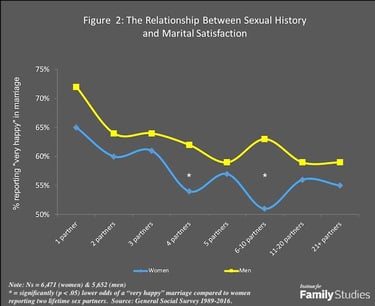
Nonetheless, all ancient religions treat sex and marriage as sacred. Degenerate moderns sadly lack ancient understanding on the power of chastity and sacred embrace. When you have sex with someone, there is a sacred magnetic exchange that has important implications for your entire life. Marriage provides a vehicle through which man and woman can transform their sexual forces and attain purity.
Sex used improperly causes great harm through heartbreak, betrayal, self-abuse, violation, and worse. Sexuality used properly with rectitude and connection to divinity is the most potent healing force in the universe. Sex creates the strongest bonds in human relationships, and can transform husband and wife through an alchemical marriage.
All religions are founded upon solid reason, but when the reason is not explained, the religion loses its authenticity and becomes mere belief, dogma, or tradition, easily contradicted, forgotten, or abandoned. Yet, when a person can experience and understand why an action is to be avoided, then they are more likely to take the right course.
Marriage is sacred and rightfully protected by all religions. Through the sacrament of marriage, the very purpose of religion is fulfilled. If the marriage is not respected, that is, made impure or "adulterated", then the purpose of religion is lost.
Man is one half and woman is the other half. During the sexual act they experience the joy of being complete. Those who avoid the original sin preserve this joy eternally. May the love of God shower on the perfect couple.
"Since a woman’s body is a passive and receptive element, it is clear that her body collects and stores more of the results of the sexual acts than all of those men who commit adultery with her; those results are atomic substances from the men with whom she has had sexual intercourse. Therefore, when someone has sexual intercourse with a person who has been with another partner or other partners, both then absorb the atomic essences of the other partners and poison themselves with them. This is a very grave problem for those brothers and sisters who are dissolving the “I” because then, not only do they have to fight against their own errors and defects, but more over, they have to fight against the errors and defects of those other partners with whom they had sexual intercourse." —Samael Aun Weor

Related
Qurania © 2026
Qurania's primary objective is to rectify misconceptions and assertions regarding the Qur'an.
Reframe your inbox
Subscribe and never miss a new article.
We care about your data in our privacy policy.